

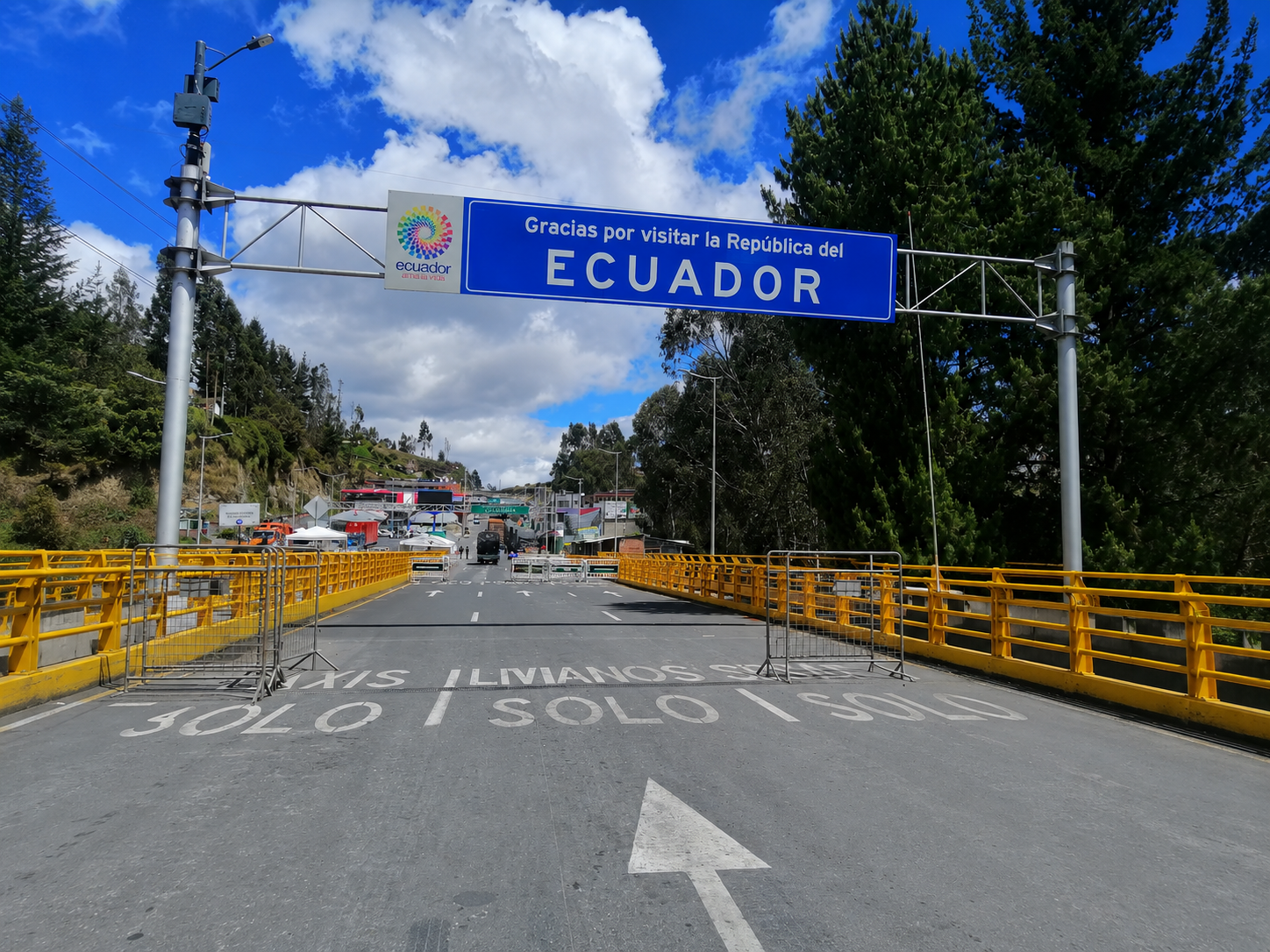
In 2025, Colombia was the third-largest source of Ecuadorian imports, totaling USD 2,161.9 million, surpassed only by the United States and China. It is neither a marginal supplier nor one that can be replaced in a matter of weeks; it is a structural component of supply chains in sectors as diverse as pharmaceuticals, textiles, agro-industry, and industrial inputs. A relationship of this magnitude does not vanish by decree. What can happen—and did—is that the regulations governing it change in a matter of days, altering margins, contracts, and inventory decisions before companies have time to react.
The Security Fee: A Non-Technical Trade Disruption
This is exactly what the security fee demonstrated between February and May 2026. This mechanism did not originate as a trade policy, which is precisely why it was so difficult for companies to manage: its escalations responded to a logic of political pressure and border security, rather than technical foreign trade criteria.
No cost model could anticipate whether the following month would bring a 70% or 100% rate. The sectors with the highest exposure were:
- Processed foods
- Pharmaceuticals
- Textiles
- Industrial inputs
All of these sectors faced real difficulties in substituting suppliers in the short term. For these companies, the core issue was not the additional cost itself, but the fact that the cost had no foreseeable horizon for resolution.
Asymmetric Impact.
The economic impact was not uniform across the Ecuadorian business landscape:
- For Import-Competing Producers: The reduction in Colombian supply favored domestic producers who competed directly with those finished goods.
- For Input-Dependent Manufacturers: A company manufacturing in Ecuador using Colombian raw materials did not gain market share due to the fee; it either absorbed the cost, passed it on to the customer, or reduced production.
The measure created clear winners and losers, and the difference between them was simple: if Colombia was your competition, the fee opened up market space; if Colombia was your supplier, it made your operations more expensive.
Geopolitics and the Reframing of a Legal Retreat
The conclusion of this episode warrants a precise reading. The Andean Community (CAN) had issued a binding resolution that placed Ecuador at risk of legal proceedings before its Court of Justice if it maintained the fee. Multilateral pressure was real and carried concrete legal consequences.
What President Noboa did was transform this retreat into something else: two days before the Colombian elections, after staging a public commitment to mutual collaboration during a video call with De la Espriella—the right-wing candidate who led the first round with 43.74% of the vote—he announced the lifting of the fee alongside reciprocal commitments in security and energy.
Conversely, Iván Cepeda, a senator from the Pacto Histórico representing the continuity of the Petro administration and runner-up in the first round with 40.9% of the vote, accused the Ecuadorian president of interfering in the Colombian elections. A mandatory legal retreat was reframed as a voluntary agreement between two aligned leaders. This does not change the substance, but it does alter the narrative moving into the next chapter.
Strategic Foresight for the June 21 Runoff
The runoff election on June 21 will define the bilateral environment for the second half of the year, presenting two distinct corporate risk profiles:
- A De la Espriella Administration: Arrives with public commitments in trade, energy, and security, backed by bilateral political capital built before taking office.
- A Cepeda Administration: Arrives with a pre-existing grievance, while also representing ideological continuity with a government that refused to back down throughout the entire escalation.
For CFOs and Supply Chain Directors: For any company using Colombia as a source of inputs, an export destination, or a component of its logistics chain, this election is not a peripheral political event. It is the primary variable determining the predictability of the corridor over the coming year. The minimum exercise required in this context is to establish two separate budgets for the second half of the year—one for each scenario—prior to June 21.